Axes | Themes | EcoTypes | Priorities | Going Deeper
EcoTypes includes twelve axes, from which three themes and twelve EcoTypes are derived. EcoTypes can be applied in many ways, including our global priorities. An introduction to each is below.
Take the EcoTypes Survey
You’ll receive your own personalized report.
The report includes your axis and theme scores, and your EcoType, all detailed below.
Axes
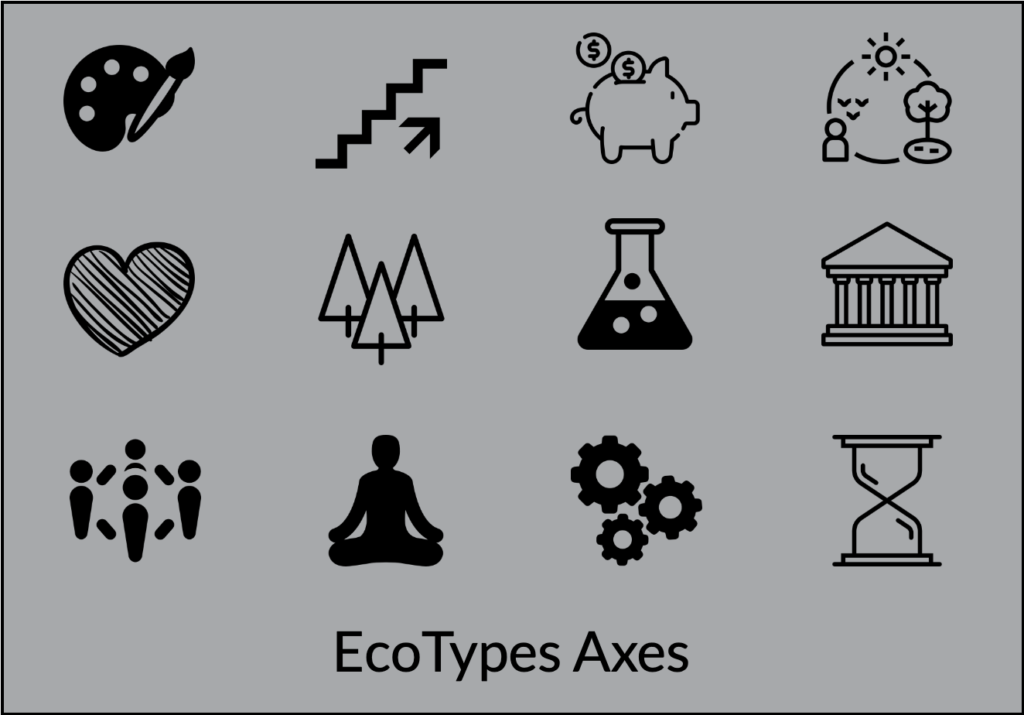
The twelve axes are the building blocks of EcoTypes. Each addresses a fundamental consideration in how we approach environmental issues. There can be differing opinions on each, summarized via axis poles. Some may sound clearly related to your EcoType—your environmental framework—such as Ecosystems and Nature; but many others, such as Change, Spirituality, Technology, and Time, may strike you as surprising. Yet thousands of completed EcoTypes surveys have suggested that each of these axes is highly relevant.
EcoTypes Axes
The fundamental building blocks of EcoTypes.
Wide range of axes, from Aesthetics to Time. Twelve axes in all.
Each has two poles to express variety of opinion.
Themes
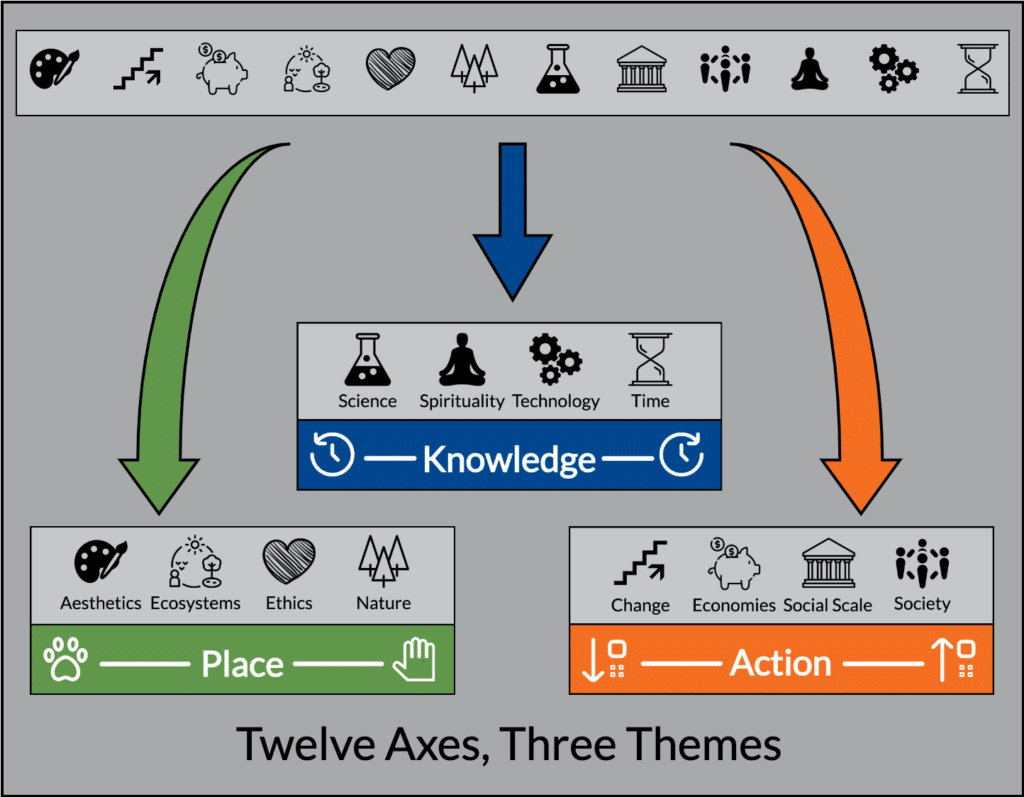
Themes are statistical combinations of axes that address a common big question and embody a key tension in how we approach environmental issues. The three themes are Place, Knowledge, and Action.

These themes were determined via factor analysis of thousands of responses to the EcoTypes survey over the last several years. Factor analysis combines similar axes based on the biggest differences among respondents. These differences are expressed via a key question underlying each theme, and theme attractors summarizing our divergent answers to this question.
EcoTypes Themes
Statistical combinations of common axes from thousands of survey responses.
Three themes: Place, Knowledge, and Action.
Each addresses a big question and embodies a key tension in how we approach environmental issues.
EcoTypes
EcoTypes are patterns in theme scores—Place, Knowledge, and Action. There are twelve EcoTypes: four each for the three theme domains of Place/Knowledge, Knowledge/Action, and Action/Place. EcoTypes build on axes and themes as introduced above.
Each EcoType is a phrase summarizing one broad approach to environmental issues: one summary of survey axis and theme scores. There are many different ways to approach issues of environment! None is necessarily better or worse.
Curious what your EcoType is? Take the survey and find out!
EcoTypes
Patterns in Place, Action, and Knowledge themes.
Twelve EcoTypes: four for each of three theme domains (example at right: Place/Knowledge).
EcoTypes are our broad (and differing) approaches to environmental issues, summarizing survey axis and theme scores.

Global Priorities
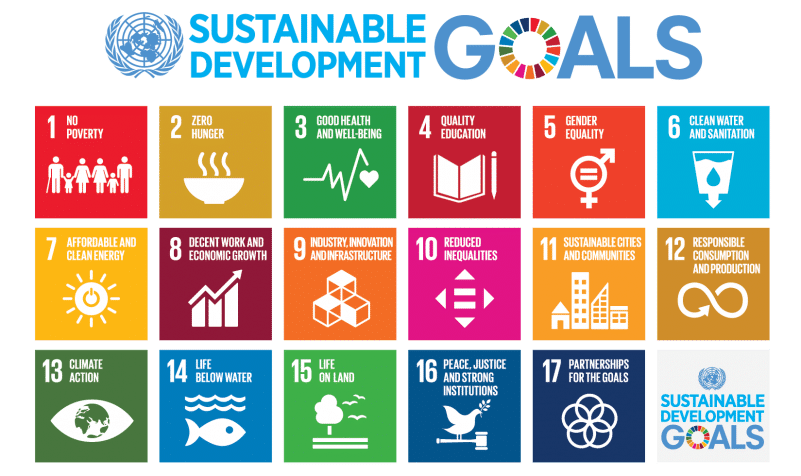
How do differing EcoTypes matter in our world? One way to apply EcoTypes is in the context of our global priorities. The EcoTypes survey includes a wide range of possible priorities, all included among the U.N. Sustainable Development Goals (SDGs), to allow us to explore how differing EcoTypes may result in differing—or, perhaps, similar—global priorities.
In the same way that your EcoType is related to a wide range of fundamental considerations (EcoTypes axes, summarized as themes), including but not limited to what we think of as “environmental” ones, the SDGs include a wide range of global priorities, including but not limited to “environmental” ones. So, for instance, Climate Action is an SDG, but so are No Poverty, Gender Equality, and others.
Each EcoTypes persona (idealized character representing their EcoType) includes one SDG they support. Overall, this wide range of SDGs offers concrete policy examples of the twelve differing EcoTypes.
Global Priorities
Our differing EcoTypes relate to differing priorities for our world.
The EcoTypes survey explores these priorities via the U.N. Sustainable Development Goals.
Each EcoTypes persona includes one SDG they support.
Going Deeper

Going Deeper With EcoTypes Components
You’ve just read about the main components of EcoTypes, and how they relate. But this information may have raised questions in your mind.
What are you especially curious about at this point regarding these components?